

Bedroom Wall Decor Ideas: How to Style Every Wall for Rest with InkPoster
The best bedroom wall decor ideas calm the room rather than energise it: one considered piece above the bed, soft colors and gentle subjects, freedom on the other walls, and nothing that glows after dark. A framed print, a small gallery, a mirror, or a color ePaper art display such as InkPoster, which adds no light to the room and changes its art from an app, all fit that principle.
This guide covers the main walls in a bedroom and the ideas that suit each, with the palette, lighting, and placement notes that keep the room restful.
Key takeaways
- Above the bed, hang one piece or a centred grouping about two-thirds the width of the headboard, six to eight inches above it.
- On the other walls, choose a single artwork, a small calm gallery, texture, or a mirror.
- Keep colors soft and hold to one dominant element per wall.
- For art that changes without adding light at night, InkPoster’s glare-free ePaper screen is cordless and adds no glow after lights-out.
Best Digital Art Poster 2025 — Esquire · Best Use of E Ink, CES 2025 — The Verge
How Do You Set a Calm Tone for Bedroom Walls?
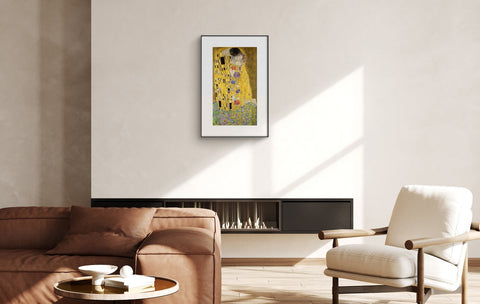
Image: Gustav Klimt. Der Kuss (Liebespaar). Belvedere Museum, Vienna. CC0, Public Domain
Before choosing pieces, set the tone: a bedroom rewards subdued, restful colors and soft subjects over bold, high-contrast decor. Soft neutrals, teal, muted blue, warm peach, and clay can create a more restful atmosphere, and art with gentle subjects reinforces it. Decide the mood first, and the individual choices fall into place around it. A room that tries to make every wall a statement stops feeling like a place to sleep. InkPoster makes it easy to change the artwork with your mood while keeping the bedroom’s atmosphere calm and considered.
What Should Go on the Wall Above the Bed?
The wall behind the bed is the room’s anchor, and it usually wants one considered choice rather than a busy mix. A single statement piece, a diptych or triptych spanning the headboard, or a carefully centred grouping all work — sized to about two-thirds of the headboard’s width and hung six to eight inches above it so there is room to sit up. Because this wall is directly over where you sleep, favour lighter pieces and calm subjects, and keep sharp objects off the wall directly above the pillows. If the bed has no headboard, a large piece sized close to the width of the bed can stand in for one, anchoring it the way a headboard would. A framed InkPoster offers an easy way to bring art above the bed and refresh it whenever the mood calls for a change.

© Pininfarina.
How Do You Decorate the Other Bedroom Walls?
The other bedroom walls — opposite the bed, beside a dresser, in a reading corner — are where you have more freedom. Options that suit a bedroom include:
- A single piece of art that carries the wall on its own, calm in tone and scaled to the furniture below.
- A small gallery wall of soft, cohesive pieces, kept restful rather than eclectic.
- Texture — a woven hanging or a textile — for warmth without visual noise.
- A mirror, which brightens the room and makes a small bedroom feel larger.
- A digital art frame – InkPoster can display different artworks as your taste or mood changes.
For the mechanics of spacing and height on any grouping, see how to arrange wall art.
Which Ideas Suit Different Kinds of Bedroom?
The same principle of rest applies everywhere, but the right idea shifts with the size and purpose of the room.
A small bedroom. In a compact room, every object on the wall is seen from close range, so fewer and lighter pieces work best. One mid-size piece above the bed, or a mirror on the wall opposite the window, adds interest while keeping the room feeling open. Keep frames slim and colors soft, because heavy frames and dark tones make a small room feel smaller.
A primary bedroom. A larger room can carry scale, and the wall above the bed is where that scale belongs. A single large piece reads as calmer than a crowded gallery wall, since it gives the eye one place to rest. If there is a seating area or a dresser wall, treat it as a secondary zone with a smaller, related piece so the room feels considered from every angle.
A guest room. Guest rooms benefit from neutral, welcoming art that suits many tastes, such as landscapes, botanical studies, or soft abstracts. Because the room is used occasionally, it is also a good place for pieces that change with the season, so the room feels fresh each time someone stays.
A child’s room. Children’s rooms can take more color and playfulness, but the wall above the bed should still lean calm to support sleep. Illustrations, posters, and gentle animal or nature subjects work well, and anything hung above the bed should be light and securely fixed.
How Should You Light a Bedroom Wall?
Light changes how every piece on a bedroom wall reads, so it deserves as much thought as the art. Warm, low light suits the evening, and wall sconces or a small picture light on either side of the bed give the wall a soft glow without the glare of an overhead fixture.
Daylight matters too. A wall facing a window gets even, gentle light for most of the day, which suits art with fine detail, whereas a wall beside the window is lit from the side and favours bolder, simpler pieces. Glossy frames and glass can catch reflections from a window or a lamp, so matte finishes and non-reflective surfaces keep the view calm from the bed. InkPoster’s paper-like display follows the same principle, letting the artwork sit comfortably within the room rather than stand out as a screen.
Why Does a Non-Glowing Surface Matter in a Bedroom?
For bedrooms, a reflective display offers a calm, paper-like way to enjoy changing art without adding light to a room designed for dark. InkPoster’s glare-free, matte color ePaper screen reflects ambient light like a framed print, so it adds no glow after lights-out, unlike backlit displays that emit light into the room. This is the core of why an E Ink art frame suits the bedroom — and a display like InkPoster brings one extra advantage here, letting you rotate calm art by season from an app while staying cordless, so a bedside wall with no outlet is no obstacle. Its image also holds without power, so it reads as a settled wall piece rather than a device on standby. It uses power only when the image changes, so it can run for up to a year between charges, and switching art, managing the curated gallery, and checking battery life all happen in the InkPoster app.
It also emits no harmful blue light, and once an artwork is on display there is no flicker, heat, or noise, which is why this kind of calm-tech display is comfortable in bedrooms and children’s rooms alike.
How Can You Change the Wall With the Seasons?
A bedroom wall does not have to stay the same all year. Lighter, airier pieces suit spring and summer, while warmer tones and deeper subjects make the room feel cosier through autumn and winter, and a small change like this can refresh the whole room without repainting or buying new furniture.
For people who enjoy refreshing their art with the seasons, a digital art display lets one frame show different works through the year, so the same frame can show a soft landscape in summer and a winter scene in December. InkPoster includes a curated gallery of up to 2,000 hand-selected, licensed artworks, from masterpieces by Van Gogh, Monet, and Klimt to contemporary work and vintage posters, and a timed slideshow can rotate them for you, so you can change the entire atmosphere of your bedroom with a single tap.
How Do You Keep the Room Restful?
A few habits keep a bedroom’s walls calm rather than cluttered. Hold to one dominant element per wall rather than competing features; keep the palette narrow and muted across the room; and leave some wall to breathe — not every surface needs filling. In a bedroom, restraint is the decor: the quieter the walls, the more restful the room. An InkPoster fits this approach to calm interiors, displaying art without the glow or visual distraction of a conventional screen.
Shop InkPoster
- Affresco 31.5” · A statement-scale piece to anchor the wall above the bed or opposite it.
- Affresco 13.3” · Full E Ink Spectra 6 in a compact format for a bedside wall or accent spot.
- Tela 28.5” · Gallery-scale, for a statement piece in a larger bedroom.
- Tela 40.5” · A large statement piece for a master bedroom. Available soon.
- Duna 40.5” · Pininfarina design, Alcantara in Black, White, or Brown. Available soon.
Browse all models at inkposter.com — up to 2,000 curated, licensed artworks included with purchase.
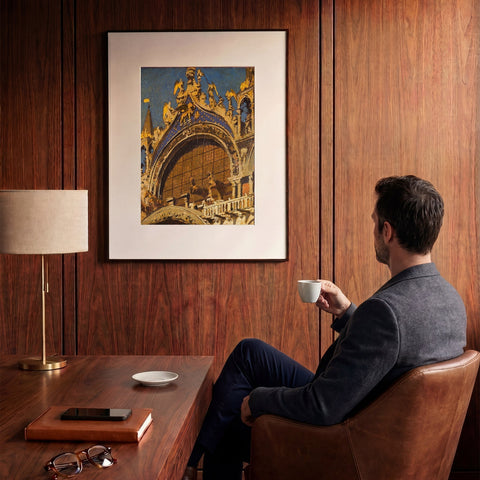
Image: Walter Richard Sickert. The Horses of St Mark's, Venice. Birmingham Museums Trust, www.birminghammuseums.org.uk. CC0, Public Domain
FAQ
How should I decorate a bedroom wall?
Lead with calm: subdued colors and soft subjects, one considered choice per wall rather than a busy mix. Anchor the wall over the bed with a single piece or a centred grouping, and give the other walls freedom for art, texture, or a mirror.
What colors are best for bedroom wall decor?
Soft neutrals, muted blues, teal, warm peach, and earthy clay can create a more restful atmosphere and keep the room feeling like a retreat rather than a feature space.
What should go on the wall above the bed?
One statement piece, a diptych or triptych, or a centred grouping, sized to about two-thirds of the headboard and hung six to eight inches above it, in calm subjects and light frames.
Is a digital art display suitable for a bedroom?
Yes, if it doesn’t glow. A matte, non-emitting display such as InkPoster adds art without adding light after dark, holds its image without power, and — being cordless — hangs on a bedside wall with no outlet.
How do I decorate a small bedroom wall?
Use fewer, lighter pieces: one mid-size artwork above the bed or a mirror opposite the window, with slim frames and soft colors, so the room feels open rather than crowded.
What art suits a child’s bedroom?
Illustrations, vintage posters, and gentle nature or animal subjects work well. Keep the wall above the bed calm to support sleep, and make sure anything hung there is light and securely fixed.
Header image: COPYRIGHT Credits: Amedeo Modigliani. Portrait of a Woman. Cleveland Museum of Art. Public Domain ; Amedeo Modigliani. Adrienne (Woman with Bangs), 1917. National Gallery of Art, Washington, D.C., Chester Dale Collection, 1963.10.171. Public Domain.


